



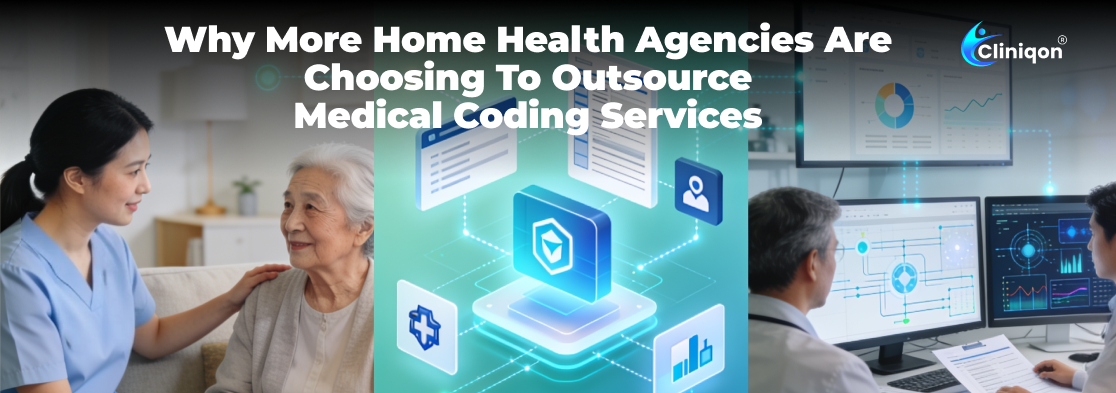

Why More Home Health Agencies Are Choosing to Outsource Medical Coding Services
The home health industry is evolving faster than ever. Rising patient volumes, tighter reimbursement models, increasing regulatory scrutiny, and ongoing workforce shortages have created a perfect storm for providers trying to maintain operational efficiency while delivering quality care.
Amid these pressures, one function has become increasingly difficult to manage in-house: medical coding and QA review.
Accurate coding is the foundation of compliant documentation, timely reimbursement, and clean claims. Yet recruiting and retaining experienced home health coders has become a challenge, especially when coding requirements continue to grow more complex. As a result, many agencies are rethinking their staffing strategies and exploring whether it makes sense to outsource coding for home health .
But outsourcing is no longer simply a cost-saving exercise. The right coding partner can improve revenue cycle performance, reduce denials, support compliance initiatives, and give clinical teams more time to focus on patient care. The wrong partner, however, can create bottlenecks, inconsistencies, and impact reimbursement with improper coding.
So, how should home health agencies approach this decision?
The New Reality of Home Health Coding
Home health coding today extends far beyond assigning diagnosis codes. Coders must understand the nuances of OASIS documentation , physician orders, payer-specific requirements, PDGM implications, and evolving CMS guidelines. Small coding inaccuracies can have a significant impact on reimbursement and audit outcomes.
At the same time, agencies are often dealing with:
-
Difficulty hiring and retaining qualified home health coders.
-
Fluctuating patient census and seasonal volume changes.
-
Increased pressure to reduce billing turnaround times.
-
Greater focus on compliance and audit readiness.
-
The need to scale operations without increasing fixed overhead.
In this environment, many organizations are discovering that outsourcing home health coding provides the flexibility and expertise needed to keep operations running smoothly.
Outsourcing Should Deliver Expertise, Not Just Capacity
A common misconception is that agencies should outsource only when they are understaffed. In reality, leading organizations view outsourced coding as a strategic extension of their internal team.
An experienced coding partner brings specialized knowledge that can be difficult and expensive to build internally, while keeping your agency compliant. Dedicated home health coders work across multiple agencies, stay current with regulatory updates, and often have established quality assurance processes that smaller teams cannot easily replicate.
When evaluating providers that outsource medical coding for home health, agencies should look beyond staffing numbers and ask:
-
How do they stay updated on CMS coding and documentation changes?
-
What quality review and auditing processes are in place?
-
Can they provide coding consistency across different payers and geographic markets?
The goal is not simply to outsource tasks, but to gain access to expertise that strengthens the overall revenue cycle.
Turnaround Time Matters More Than Ever
Coding delays have a ripple effect across the organization. When charts sit in queues waiting for review, billing slows down, cash flow is impacted, and administrative teams spend valuable time chasing updates.
A reliable, outsourced coding model should support predictable turnaround times that align with your agency's operational goals. Whether the need is same-day coding for high-volume workflows or next-business-day completion, service-level expectations should be clearly defined from the start.
However, speed should never come at the expense of quality. The best providers combine rapid turnaround with robust quality checks, ensuring accuracy before claims move forward.
When considering outsource medical coding services for home health, agencies should ask prospective partners to share their average turnaround metrics and coding accuracy benchmarks.
Compliance and Quality Assurance Cannot Be an Afterthought
The financial impact of coding errors extends beyond denied claims. Inaccurate coding can increase audit exposure, create compliance vulnerabilities, and affect an agency's overall financial health.
A strong outsourcing partner should have a structured quality assurance program that includes:
-
Multi-level coding reviews.
-
Regular internal audits.
-
Ongoing coder education and training.
-
Performance tracking and reporting.
-
Escalation processes for documentation clarification.
Transparency is equally important. Agencies should have visibility into coding quality metrics and receive regular reports that highlight trends, opportunities for improvement, and areas requiring attention. A collaborative approach to quality improvement often delivers greater long-term value than simply correcting charts after issues arise.
Technology Integration Is a Competitive Advantage
Today's home health operations rely on a connected technology ecosystem. The coding partner should be able to work seamlessly within the agency's existing EMR and workflow processes without creating unnecessary friction.
Whether your organization uses WellSky, MatrixCare, Homecare Homebase (HCHB), or another platform, integration capabilities can significantly influence productivity and turnaround times.
The right outsourcing partner should fit into your workflows - not force you to redesign them.
Questions to consider include:
-
What is your turn around time frame?
-
Are your coders coding and Oasis certified?
-
Which EMR systems does the coding team support?
-
How are documentation queries handled?
-
What security and HIPAA compliance measures are in place?
-
How is communication managed between coders and agency staff?
Operational alignment is often what separates a successful outsourcing relationship from a frustrating one.
Scalability Is One of the Biggest Hidden Benefits
Home health agencies rarely experience steady, predictable volumes throughout the year. Referral spikes, acquisitions, seasonal fluctuations, and expansion into new markets can quickly strain internal coding teams.
One of the most compelling reasons to outsource coding for home health is the ability to scale resources up or down without the costs and delays associated with hiring, onboarding, and training additional staff.
A scalable outsourcing model allows agencies to:
-
Manage census growth without staffing disruptions.
-
Maintain productivity during employee absences or turnover.
-
Support expansion into new service areas.
-
Handle temporary backlog situations without sacrificing quality.
This flexibility enables leadership teams to focus on growth opportunities rather than operational constraints.
A Partnership Mindset Creates Better Outcomes
The most successful outsourcing relationships are built on collaboration rather than transaction. Coding partners should act as an extension of your internal team, proactively identifying documentation gaps, sharing industry insights, and recommending process improvements.
A true strategic partner contributes beyond coding by helping agencies:
-
Reduce claim denials and rework.
-
Improve documentation quality.
-
Enhance clinician education.
-
Support audit preparedness.
-
Optimize overall revenue cycle performance.
Ultimately, the objective is not to replace internal expertise but to strengthen it.
Choosing the Right Home Health Coding Partner
When evaluating providers, agencies should look for a combination of domain expertise, operational maturity, and cultural fit. A good outsourcing partner should demonstrate:
-
Deep experience in home health coding and OASIS workflows.
-
Certified coding professionals with ongoing education programs.
-
High coding accuracy rates backed by quality assurance processes.
-
Flexible staffing models that adapt to changing volumes.
-
Strong data security and HIPAA-compliant practices.
-
Seamless integration with leading home health EMRs.
-
Transparent communication and performance reporting.
Rather than asking, "Can they code our charts?" the better question is, "Can they help us build a more efficient and resilient coding operation?"
How Cliniqon Supports Home Health Agencies
At Cliniqon, we believe that outsourcing should create strategic value - not just operational relief. Our home health coding solutions are designed to help agencies improve accuracy, accelerate reimbursement, and confidently navigate an increasingly complex regulatory environment.
Our dedicated home health coding teams work as an extension of your organization, combining deep industry expertise with scalable delivery models and technology-enabled workflows. Whether you need ongoing coding support, assistance during staffing shortages, or a long-term partner to strengthen your revenue cycle, we provide the flexibility and reliability modern agencies require.
Why Home Health Agencies Partner with Cliniqon
-
Specialized expertise in home health medical coding and OASIS-related workflows.
-
Certified coding professionals with continuous training on CMS updates and industry best practices.
-
Flexible, scalable engagement models to support agencies of all sizes.
-
Fast turnaround times without compromising quality or compliance.
-
Seamless collaboration with your existing EMR and operational processes.
-
A proactive, partnership-driven approach focused on long-term success.
As the home health landscape continues to evolve, agencies that embrace specialized partnerships will be better positioned to improve financial performance while keeping their attention where it belongs - on delivering exceptional patient care.


Recommended Articles
May, 2026 Home Health RCM Process Optimization: Step by Step Process to Increase Claim Approval
Read MoreMay, 2026 How AI is Transforming Revenue Cycle Management in Home Health and Hospice Care
Read MoreMay, 2026 Signs Your Home Health Agency Needs Coding Support Services
Read MoreMar, 2026 Smarter administration and smoother operations for improved cash flow management
Read MoreMar, 2025 How to Prevent Common Errors in Home Health and Hospice Coding
Read MoreDec, 2024 Home Care Trends to Watch For in 2025
Read MoreNov, 2024 Key Updates in the CY 2025 Home Health Prospective Payment System Final Rule
Read MoreOct, 2024 The Final Rule for Home Health Prospective Payment System for 2024 - Including a 0.8% Payment Increase and More
Read MoreSep, 2026 The ABA Capacity Gap: Why Growing Providers Struggle to Turn Demand into Delivered Care
Read MoreJul, 2026 Why Payment Posting Is One of the Most Overlooked Yet Critical Functions in Revenue Cycle Management
Read MoreFeb, 2026 How Applied Behavior Analysis (ABA) Clinics can better manage their revenue cycle with the right partners
Read MoreJan, 2026 Eliminating Documentation Burnout: Using AI to Solve Home Health and Hospice Coding & QA Challenges
Read More